There are coding programs for third graders. Robotics teams for middle schoolers. A clear, structured pipeline for kids who want to work in tech.
For kids who want to work in medicine? There’s been nothing. No obvious search term. No structured path that starts before college applications. Just a curious kid, a supportive parent, and a lot of guessing.
MedPath is the answer to that gap. A family physician built it from the ground up — not a textbook committee, not a general science publisher. Dr. Robin spent decades in clinical practice watching what patients and future doctors most needed to understand. Then she built a program around that.
Here’s what it is, how it works, and whether it’s right for your child.
Why Standard Science Education Isn’t Enough for Future Healthcare Professionals
Most science curricula target general education. They cover the heart pumps blood, the lungs take in air, then move on to weather patterns and plant biology. That works fine for general education. It doesn’t work for a kid who wants to be a cardiologist, a veterinarian, a genetic counselor, or a nurse practitioner.
School science teaches biology to everyone for a well-rounded education. MedPath teaches medicine to future healthcare professionals to build a real foundation.
Those are not the same thing.
The problem isn’t that kids with medical interests aren’t capable. Nobody has ever built something specifically for them — the way someone built coding programs for kids who want to work in tech. MedPath is the first program of its kind to do exactly that.
What’s actually at stake if you wait
Premed in college isn’t just about learning the material. It’s about being weeded out. The attrition rate is brutal. The students who don’t make it through are rarely the ones who weren’t smart enough. They’re the ones who memorized their way through high school biology and arrived at college having never thought like a clinician.
The window to build a real foundation is longer than most parents think — but it doesn’t start when you expect. A third grader who starts learning clinical-level content doesn’t get overwhelmed. She gets ahead. By the time her peers see a human heart for the first time in AP Biology, a MedPath student has already worked through the cardiac cycle. She understands what goes wrong with a heart valve. She knows the difference between heart failure and cardiac arrest.
Starting early doesn’t pressure kids. It gives them years to absorb, revisit, and genuinely understand — instead of cramming.
What MedPath Actually Is
MedPath is a four-level, physician-designed pre-med program for kids and teens. Students work through anatomy, physiology, pathophysiology, and clinical reasoning — not as isolated facts to memorize, but as a connected system to understand.
Every lesson starts from a single premise: understanding why something works matters more than remembering what it’s called. A student who can reason through a problem they’ve never seen before — using what they know about how the body works — will outperform a student who memorized the same material without understanding it. Every time.
That’s what MedPath teaches. From the first lesson.
Who MedPath is for
MedPath works for kids and teens who are curious about medicine, the human body, or healthcare careers. It runs alongside whatever school science they’re already doing. It’s not a replacement — it’s the clinical depth that school science never provides.
It also works for parents who want to support that interest but don’t know how. You don’t need a medical background. Dr. Robin does the teaching. Your job is to get your child set up and learn alongside them.
Families use MedPath whether kids attend traditional school, homeschool, or anything in between. The common thread: a child with genuine interest in medicine and parents who want to give that interest real structure.
The Four Levels of MedPath
MedPath grows with your child. Each level builds on the last, adding clinical depth and complexity as students are ready for it. Students start at whatever level fits them — not where a grade level says they should be.
MedPath Foundations
Short, hands-on lessons built around the Anatomy Coloring Book. This is the right starting point for younger learners and for anyone brand new to clinical-level science. The focus: building vocabulary, developing curiosity, and making the body feel personal — not just a diagram to label.
Learn more about MedPath Foundations →
Level 1: Essentials of Human Health
A guided tour through the body’s major systems. Students learn how each system works, what it needs, and what happens when something goes wrong. They come away with a real framework for the human body — not a list of parts, but a picture of how everything connects. This level includes video lessons, the Anatomy Coloring Book, the level 1 workbook of guided notes, and optional models/activities demonstrated by Dr. Robin (families source materials).
Learn more about MedPath Level 1 →
Level 2: Principles of Clinical Biology
This is where students start thinking like clinicians. Level 2 introduces systems thinking — reasoning through clinical scenarios using what they know about how the body works. This is the bridge between learning facts and applying them. This level includes video lessons, the Anatomy Coloring Book, the level 2 workbook of guided notes, and more extensive optional models and activities demonstrated by Dr. Robin (families source materials).
Learn more about MedPath Level 2 →
Level 3: Comprehensive Medical Biology
Real-world clinical reasoning, pathophysiology, case-based reasoning, and hands-on labs including simulations, physiological experiments, and dissections. Level 3 suits students who are ready for fully self-directed work at a genuinely rigorous level. Physician parents consistently tell us they’re surprised by how deep the content goes. This level includes video lessons, the level 3 workbook of guided notes, the Anatomy Coloring Book, and the lab manual that students work through independently (families source lab materials).
Learn more about MedPath Level 3 →
What Makes MedPath Different from Any Other Science Program
A physician-educator built it
Most science curricula come from educators following a standard scope and sequence. They teach what has always been taught, not what people actually need to know. Dr. Robin built MedPath from the other direction. She started with what her patients most needed to understand about their own health, then built backward from there.
The result is content that is clinically accurate, immediately applicable, and free of the random trivia that fills textbooks but never comes up in a doctor’s office.
It covers the full landscape of healthcare careers
Most kids interested in medicine can name three options: doctor, nurse, vet. MedPath exposes students to dozens — physician, nurse practitioner, veterinarian, dentist, genetic counselor, clinical dietitian, anesthesiologist, medical illustrator, public health nurse, urologist, and more. Career content runs through every system at every level — not as an afterthought, but as part of the foundation.
Students make informed career choices instead of default ones.
Parents don’t need a medical background
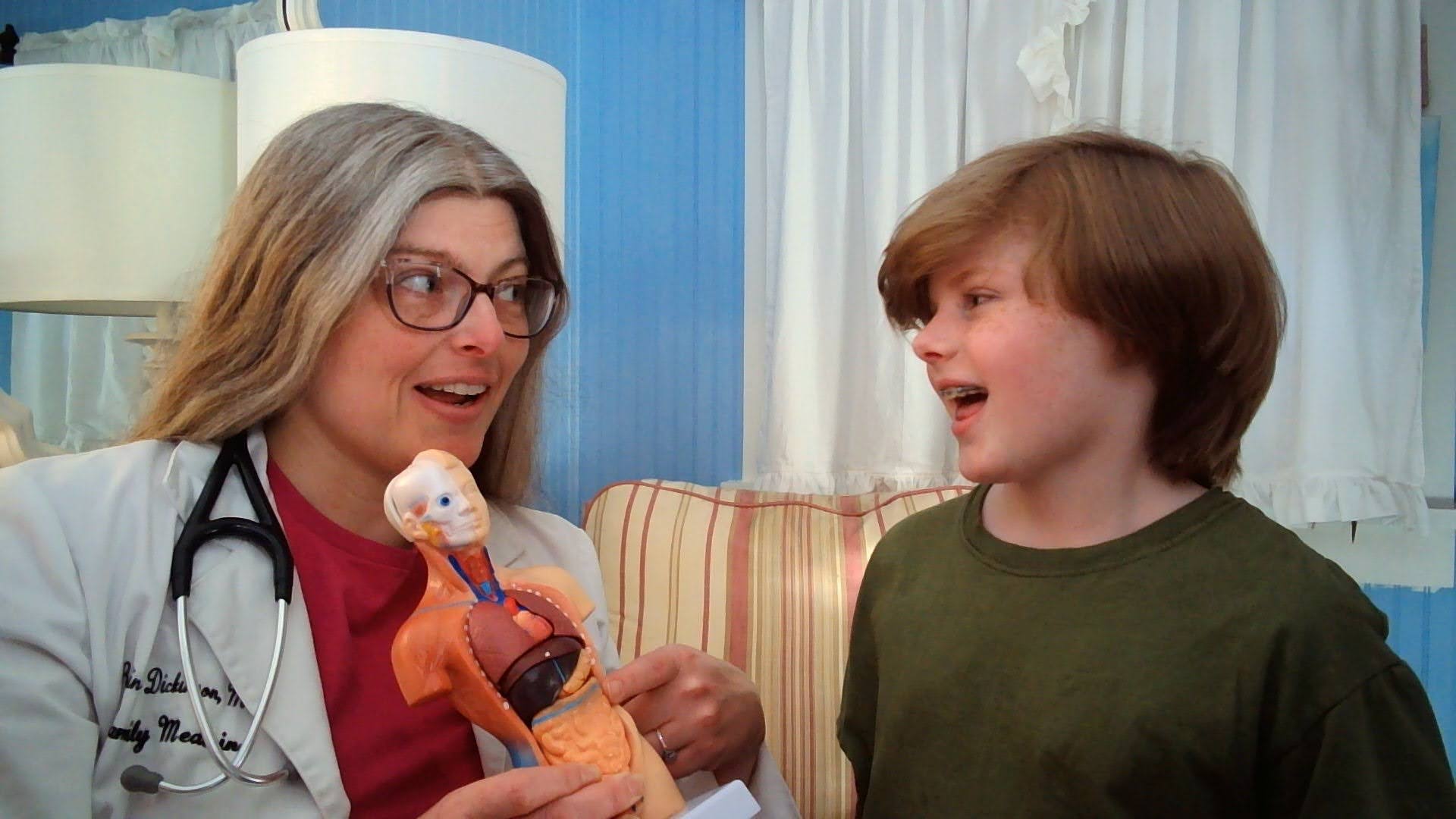
Dr. Robin does the teaching. The lessons are clear enough for kids and accurate enough for adults. Parents serve as the guide — MedPath gives them everything they need to play that role well, with no science background required.
It starts before high school, when there’s actually time
The earlier a student builds the foundation, the better their odds — not just of getting into a healthcare program, but of thriving once they’re there. MedPath doesn’t push harder. It starts sooner and goes deeper. That’s what makes every step after it more manageable.
What MedPath Students Actually Come Away With
MedPath students can explain not just what a body system does, but why it works the way it does — and what goes wrong when it doesn’t. They know the full landscape of healthcare careers. They can articulate what actually interests them and why. They arrive at high school biology already ahead — not because they memorized more, but because they understand more.
Some go further than that. Students who work through MedPath’s clinical cases reason through medical problems more clearly than many first-year medical students. They learned to think, not just memorize. Teens choose their premed track with real information instead of a default assumption, because MedPath showed them the full map.
Is MedPath Right for Your Child?
If your child has expressed interest in medicine, the human body, or any healthcare career — and that interest has stuck around longer than a few weeks — take it seriously.
You don’t need to know whether your child will actually become a doctor. MedPath doesn’t require a committed future physician. It either creates one, or it helps a kid discover they want something different before spending years pointed in the wrong direction. Either outcome is the right one.
Clinical from Day One.
Most programs treat clinical thinking as something students have to earn — after years of memorizing facts and proving they can absorb enough basic science before anyone trusts them to actually think. MedPath treats clinical thinking as the starting point. From the very first lesson, students aren’t just learning about the body. They’re learning to reason through how it works, what goes wrong, and what medicine can do about it. Not enrichment. Not fun facts. Not “we’ll figure it out in high school.” Clinical from day one.
Explore MedPath and find the right level for your child →
Not ready to commit? The free preview classroom lets you can see exactly how Dr. Robin teaches before you decide anything.