Course Catalog

MedPath Level 3: Comprehensive Medical Biology

The Beginning of the Pre-Med Journey

Level 3 mirrors early medical school: real labs, real dissections, and for families who choose it, real clinical case work reviewed by a working nurse. Most students spend one to two years here before finishing the series.  We are currently working on MedPath Scholars, which will come after level 3.

This level emphasizes mastery of anatomy and physiology, critical thinking through advanced case studies, and hands-on learning with labs and dissections.

Choose Your Version

MedPath Level 3 comes in two versions. Both include the identical full curriculum, every video lesson, every lab, every dissection. The difference is the clinical case work.

  1. Standard The complete Level 3 curriculum, video lessons, labs, and dissections included. No clinical case sets.
  2. Instructor Feedback, with Clinical Cases Everything in Standard, plus all three case sets, submitted directly within the curriculum and reviewed with written feedback from Jill Cooper, RN, on every submission, not an automated response or generic answer key.

Families who choose the Instructor Feedback version receive all three sets and decide which one fits their student. Most work through Sets A and B first, then return to Set C once the material feels familiar.

  • Set A: Observation. Students describe what they observe in real clinical videos and connect it to what the lesson covered. Example: watch a video on asthma, describe what it does to the airways, identify the two types of inhalers, and explain what a spirometer is used for.
  • Set B: Analysis. Students draw on multiple lessons to explain what’s happening and why. Example: using videos on asthma attacks and pulmonary function tests, identify the signs of an attack, describe what to do about it, and explain what a spirometer reveals.
  • Set C: Clinical Reasoning. Advanced scenarios requiring real clinical thinking and outside research. Example: explain why a patient would need ECMO, how it supports failing lungs, what the risks are, and what kind of team it takes to provide that level of care.

Clinical from Day One

Who This Course is For

Grades 8–12, or Advanced Students Ready for Level 3

The deepest level in the series, the one that mirrors early medical school approaches. Most students spend one to two years here.

Students Who Finished Level 2

The natural next step for students ready to move from understanding basic pathophysiology into more complex relationships between organ systems, medical labs, dissections, and clinical cases.

Students Actively Preparing for Pre-Med, Nursing, or Another Healthcare Track

Built for students taking a real next step toward a healthcare career so that you arrive in Anatomy and Physiology with a strong foundation.
During The Course You Will

What to expect

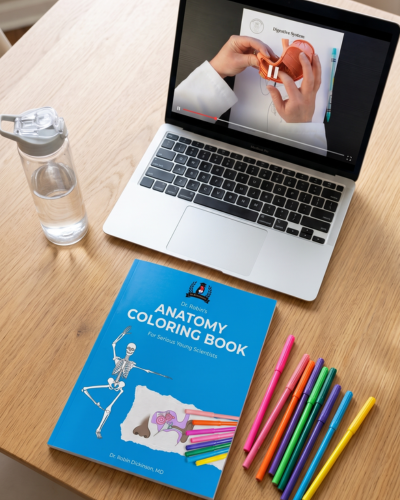
  • Watch physician-led video lessons covering anatomy, physiology, and pathophysiology at their most advanced
  • Complete real hands-on labs: measuring lung capacity, monitoring heart rate and blood pressure, testing adrenaline response, and more
  • Complete guided dissections, including heart, liver, and chicken
  • Watch MedPath Insights videos and explore Career Snapshots
  • Work through the Level 3 Workbook, Lab Book, and Dissection Book
  • Learn and apply the See One, Do One, Teach One model of medical learning
  • In the Instructor Feedback version, submit clinical case work and receive written feedback from Nurse Jill
  • Track progress with the Map & Guidebook
  • Earn a certificate upon successful evaluation

Learning Objectives

What you will be able to do

  • Integrate anatomy, physiology, and pathophysiology at an advanced level
  • Perform and interpret real labs and guided dissections
  • Reason through clinical case work, from observation to advanced clinical scenarios (Instructor Feedback version)
  • Identify healthcare careers connected to each body system and analyze your own preferences and life in relationship to the options

What's Included?

Find Your Level in Two Minutes

Syllabus

List of Modules

Anatomy: Respiratory System

  • Lungs in Situ (26:40)
  • Bronchi and Alveoli (22:18)
  • How We Make Speech (22:29)

Physiology: Respiratory System

  • Lesson: Fundamentals of the Lungs (23:59)
  • Lesson: DIY Lungs Model (13:19)
  • Lesson: Asthma (30:52)
  • Lesson: COPD (31:54)
  • Lesson: Pneumonia (26:54)

Lab: Respiratory System

  • Breathing with Lung Disease Simulation
  • Measuring Lung Capacity
  • Lungs/Pluck Dissection

Clinical Application: Respiratory System

  • Problem-Based Clinical Learning Cases
  • MedPath Insights: Saving Lives with ECMO: The Lung Rescue Program at Penn Medicine
  • MedPath Careers: Pulmonology

Anatomy: Cardiovascular System

  • Heart Exterior (20:44)
  • Cardiac Cycle (16:19)
  • Heart Interior (19:34)
  • Circulatory System (34:29)

Physiology: Cardiovascular System

  • Lesson: DIY Heart Pump Modeling (13:27)
  • Lesson: Fundamentals of the Heart (34:02)
  • Lesson: Blood and Blood Components (24:14)
  • Lesson: Heart in Situ Modeling (25:17)
  • Lesson: Fundamentals of Blood Pressure (26:11)
  • Lesson: Heart Attacks, Heart Murmurs, & Heart Failure (30:18)
  • Lesson: Taking Good Care of Your Heart (18:59)
  • Lesson: Stethoscopes (22:21)
  • Lesson: EKGs (33:02)

Lab: Cardiovascular System

  • Demonstration of Cardiac Output
  • Heart Rate and Oxygen Monitoring
  • Blood Pressure and Orthostatic Response
  • Extra Help: Fundamentals of Blood Pressure
  • Heart Dissection

Clinical Application: Cardiovascular System

  • Problem-Based Clinical Learning Cases
  • MedPath Insights: Day in the Life of a Cardiologist
  • MedPath Careers: Cardiology
  • MedPath Careers: Cardiovascular Surgeon

Anatomy: Urinary System

  • Kidneys and Bladder (18:24)
  • Kidney and Nephron (23:22)

Lab: Urinary System

  • Osmosis and a Semi-Permeable Membrane

Clinical Application: Urinary System

  • Problem-Based Clinical Learning Cases
  • MedPath Insights: Dialysis is a Lifesaver
  • MedPath Careers: Nephrology
  • MedPath Careers: Urology

Anatomy: Gastrointestinal System

  • Inside the Mouth (16:44)
  • Digestive System (32:13)
  • Small Intestine (18:03)
  • Biliary Tree (27:21)

Physiology: Gastrointestinal System

  • Lesson: Fundamentals of the Gastrointestinal System (25:18)
  • Lesson: Inside the Mouth (24:37)
  • Lesson: Teeth (27:36)
  • Lesson: Dental Chart Mini Activity (7:45)
  • Lesson: Dental Care (18:25)
  • Lesson: The Stomach and What Goes Wrong (24:55)
  • Lesson: The Small Intestine (23:54)
  • Lesson: The Liver and Hepatitis (18:58)
  • Lesson: The Pancreas (25:01)
  • Lesson: The Large Intestine (25:36)
  • Lesson: Modeling the GI System (21:50)

Lab: Gastrointestinal System

  • Dental Care and Enamel Protection
  • Salivary Amylase and Carbohydrate Digestion
  • Stomach Acid and Denaturing Proteins
  • Stomach Acid and Mineral Absorption
  • Bile and Emulsifiers
  • Liver Dissection
  • Detoxifying with Enzymes in the Liver

Clinical Application: Gastrointestinal System

  • Problem-Based Clinical Learning Cases
  • MedPath Insights: Endoscopy
  • MedPath Careers: Gastroenterology
  • MedPath Careers: General Surgery
  • MedPath Careers: Surgical Assistant
  • MedPath Careers: Dentist

Anatomy: Lymphatic

  • Lymphatic System (24:54)

Physiology: Immune System

  • Lesson: Bugs and Drugs (35:50)
  • Lesson: Fundamentals of the Immune System (21:43)
  • Lesson: Meet the White Blood Cells (26:31)
  • Lesson: Ear Infections (29:26)
  • Lesson: Vaccines (26:28)
  • Lesson: Scarlet Fever and Strep Throat (27:42)
  • Lesson: Allergies and Anaphylaxis (24:11)
  • Lesson: Autoimmune Diseases (16:50)

Lab: Immune System

  • Glo Germ Simulation
  • Handwashing and Microbial Growth

Clinical Application: Lymphatic/Immune

  • Problem-Based Clinical Learning Cases
  • MedPath Insights: Meet an Immunologist
  • MedPath Careers: Immunology
  • MedPath Careers: Infectious Disease
  • MedPath Careers: Rheumatology

Physiology: Endocrine System

  • Lesson: Fundamentals of Hormones (16:56)
  • Lesson: Candy and Blood Sugar (17:11)
  • Lesson: Fundamentals of Diabetes (26:55)
  • Lesson: How We Grow (22:52)
  • Lesson: Fundamentals of the Thyroid (22:08)
  • Lesson: The Hypothalamic-Pituitary-Adrenal Axis (21:07)

Lab: Endocrine System

  • Adrenaline and the Endocrine Response

Clinical Application: Endocrine System

  • Problem-Based Clinical Learning Cases
  • MedPath Insights: Growth Hormone Deficiency
  • MedPath Careers: Endocrinology

Anatomy: Integumentary

  • Skin (21:44)

Physiology: Integumentary System

  • Lesson: Fundamentals of the Skin, Hair, and Nails
  • Lesson: Cuts and Bruises
  • Lesson: UV Damage

Lab: Integumentary System

  • UV Light and Skin Protection

Clinical Application: Integumentary System

  • Problem-Based Clinical Learning Cases
  • MedPath Insights: Full Body Skin Exam
  • MedPath Careers: Pathology
  • MedPath Careers: Dermatology

Anatomy: Musculoskeletal System

  • Bones and Joints (27:42)
  • Comparative Anatomy of the Limbs: Bones (20:43) 
  • Comparative Anatomy of the Limbs: Muscles (25:04)
  • Axial Skeleton (15:34)

Physiology: Musculoskeletal System

  • Lesson: Fundamentals of Bones (19:17)
  • Lesson: Fundamentals of Joints (35:00)
  • Lesson: Fundamentals of Muscles (20:33)
  • Lesson: Feet (23:59)
  • Lesson: The Skull (24:49)
  • Lesson: Muscles of Facial Expression (23:04)
  • Lesson: Cleft Lip and Limb Differences (16:55)

Lab: Musculoskeletal System

  • Bone Strength and Composition
  • Muscle Fatigue Challenge
  • Chicken Dissection

Clinical Correlation: Musculoskeletal System

  • Problem-Based Clinical Learning Cases
  • MedPath Insights: Getting a Cast
  • MedPath Insights: Having Your Cast Removed
  • MedPath Careers: Physical Therapy
  • MedPath Careers: Physiatry
  • MedPath Careers: Orthopedic Surgery

Anatomy: Nervous System

  • Autonomic Nervous System (19:45)
  • Spine and Spinal Cord (17:16)
  • Dermatomes (17:45)
  • Nerve Cells (18:09)
  • Brain (22:48)
  • Homunculus (13:20)
  • Eye (18:38)
  • Ear (17:52)
  • Where Senses Go in the Brain (16:07)

Physiology: Nervous System

  • Lesson: The Brain (31:30)
  • Lesson: The Spine and Spinal Cord (19:42)
  • Lesson: Grey and White Matter (18:52)
  • Lesson: Sleep (30:03)
  • Lesson: Inner Brain Health (29:29)
  • Lesson: Using the Frontal Lobe (24:22)
  • Lesson: Amygdala (23:30)
  • Lesson: Epilepsy (25:24)

Physiology: Neurology of the Eight Senses

  • Lesson: Fundamentals of the 8 Senses (29:17)
  • Lesson: Touch (21:48)
  • Lesson: Proprioception (13:12)
  • Lesson: The Tongue and Nose (35:43)
  • Lesson: Interoception (22:35)
  • Lesson: The Ear and Hearing (23:40)
  • Lesson: Hearing and Vibrations (23:03)
  • Lesson: Vestibular System (40:52)
  • Lesson: Tuning Fork (15:16)

Lab: Nervous System

  • Sleep
  • Two-Point Discrimination
  • Blind Spot Demonstration
  • Color Afterimages
  • Proprioception Demonstration
  • Pupillary Reflexes (Autonomic)

Clinical Application: Nervous System

  • Problem-Based Clinical Learning Cases
  • MedPath Insights: A Stroke Patient Journey
  • MedPath Careers: Neurology
  • MedPath Careers: Anesthesiology
  • MedPath Careers: Ophthalmology

Nutrition

  • Lesson: Water (7:25)
  • Lesson: Fiber (9:31)
  • Lesson: Protein (8:38)
  • Lesson: Carbohydrates (6:27)
  • Lesson: Fat (7:29)
  • Lesson: Vitamins (16:17)
  • Lesson: Fat vs Water Soluble Vitamins (6:01)
  • Lesson: Minerals
  • Lesson: How to Read Food Labels (18:38)
  • Lab: Nutrition
  • Meal Planning

Clinical Application: Nutrition

  • Problem-Based Clinical Learning Cases
  • MedPath Insights: A Day in the Life of a Clinical Dietician
  • MedPath Careers: Registered Dietician
  • Healthy Choices
  • Lesson: Safety (26:09)
  • Lesson: Habits (28:58)
  • Lesson: Thinking About the Future (30:30)

Clinical Application: Healthy Choices

  • MedPath Insights: Naomi’s Story–Nurse at Level 1 Trauma Center
  • MedPath Careers: Registered Nurse

Genetics

  • Lesson: Fundamentals of Genetics and the Human Genome (25:42)
  • Lesson: Mitosis and Meiosis (17:53)
  • Lesson: Protein Synthesis (26:28)
  • Lesson: The Genetics of Earwax (24:42)
  • Lesson: Blood Type (26:30)
  • Lesson: Punnett Squares (36:39)
  • Lesson: Pedigrees (28:59)

Clinical Application: Genetics

  • Problem-Based Clinical Learning Cases
  • MedPath Insights: Day in the Life–Genetic Counseling
  • MedPath Careers: Geneticist

Anatomy: Putting It All Together

  • Systems of the Human Body (18:21)
  • The Human Cell (22:45)

Physiology: Putting it All Together

  • Lesson: Follow a Red Blood Cell (25:56)
  • Lesson: Follow the Oxygen (19:35)
  • Lesson: Mitochondria (10:39)
  • Lesson: Follow the Iron (30:26)
  • Lesson: Hereditary Hemochromatosis (22:53)

Lab: Putting it All Together

  • Diffusion and Cell Size

Clinical Application: Putting it All Together

  • Problem-Based Clinical Learning Case
  • MedPath Insights: Lab Tour
  • MedPath Careers: Otolaryngology
  • MedPath Careers: Hepatology

Frequently Asked Questions

What families wonder before signing up.

How do I know if my child is ready for Level 3?

Level 3 is typically the right fit for grades 8 to 12, or advanced students who’ve completed Level 2. Most students spend one to two years at this level and work through the material two to three times before finishing it. You can use the level finder to help with the decision.

Because of the sheer number of lessons (120+) plus labs, cases, and career exploration, it commonly takes two full years to finish level 3. During that time, students will have matured so it’s not uncommon to do it a second time.

A lot of families opt to skip the labs and dissections the first time through and if they get the version with cases, have their student do sets A and B. Doing four lessons a week, this can be completed in one school year so long as you understand this is a first pass.

The second pass through the program, their student has more experience and is able to complete all the labs, lessons, and set C cases. 

Every family gets printable downloads. If you enroll for lifetime access you receive printed books mailed to your home for free. You can also purchase the books yourselves on Amazon.

We’ve set the price for lifetime to be the same as you’d pay a year and a half of the program, knowing that most of our students need two or more years to complete it and wanting to make it more reasonably priced.

Most curricula give kids the same general science education as everyone else, all the way through high school, if they cover human biology in real depth at all. Is taught at a level appropriate for a student who aspires to a career in healthcare.

Comprehensive Medical Biology (Level 3) prepares students to walk into an AP Anatomy and Physiology class with a real clinical framework already built, not just isolated facts to memorize. Most students in that class are drinking from a fire hydrant, relying on memorization to keep up. Your student will just be filling in details.

It is, by design. Level 3 is the deepest level currently available in MedPath, and most families spend multiple years working through it. This is the level meant to prepare a student for pre-med, nursing, or another healthcare track for real.

Dr. Robin has started work on MedPath: Scholars. The program will be structured entirely differently. Instead of levels, students will have topical areas to focus on, just like in medical school. There’s no release date yet, but it’s being built to roll out over time rather than all at once.

Meet Dr. Robin

Dr. Robin is a family physician who has taught pre-med to over 3,500 kids and teens across the globe.

She has spent many years in clinical practice and years watching what happens when students arrive at the next stage without the foundation they needed.

She built MedPath from the other direction: starting with what future healthcare professionals actually need to know, and building backward from there. Not what’s traditionally taught. Not what fills a textbook. What actually matters. A comprehensive pre-med program for kids and teens.

The result is the only program of its kind anywhere in the world.
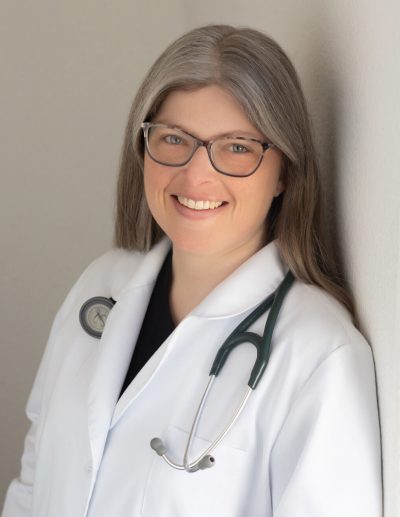
Dr. Robin Dickinson MD teaches pre-med for kids and teens at Dr. Robin's School

Not Ready? Need More Information?

We’ve designed the preview to let you see what your child’s experience will be, how Dr. Robin teaches, and what materials to expect.