Course Catalog

MedPath Level 2: Principles of Clinical Biology

Anatomy, Physiology, and What Goes Wrong.

MedPath Level 2 is where students begin to think more like a healthcare provider. Level 1 taught how the body works. Level 2 adds what goes wrong, and why. Anatomy and physiology go deeper here, with real pathophysiology layered in, so conditions like COPD, hepatitis, and anaphylaxis stop being unfamiliar words and become things a student can actually explain.

Every lesson is taught by Dr. Robin, a physician and teacher who makes anatomy and physiology clear and fun for kids. This level is designed to strengthen reasoning, persistence, and the ability to connect science with real-world applications.

One Body for Life

Who This Course is For

Kids Ready to Learn What Goes Wrong

Students who've moved past how the body works and are ready for real pathophysiology: what goes wrong, why, and what medicine does about it.

Students Who Finished Level 1

The natural next step for grades 5–8, or any student who has completed Level 1. Most students work through the material two to three times before they're ready to move up.

Kids Ready for Real Clinical Reasoning

Problem-Based Clinical Learning Cases ask students to reason through real scenarios, not just memorize facts, the same skill that determines who makes it through premed later on.
During The Course You Will

What to expect

  • Watch physician-led video lessons covering anatomy, physiology, and pathophysiology across Level 2’s body systems
  • Reason through what-if scenarios during pathophysiology lessons, not just watch and remember
  • Watch MedPath Insights videos and explore Career Snapshots for every system
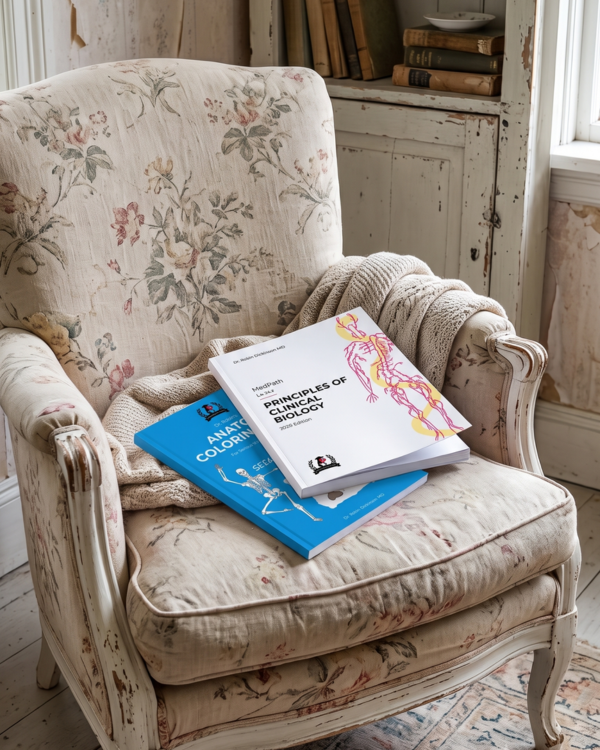
  • Work through the Level 2 Workbook alongside the Anatomy Coloring Book
  • Track progress with the Map & Guidebook
  • Earn a certificate upon successful evaluation

Learning Objectives

What will stick

  • Demonstrate understanding of complete human body systems and functions
  • Explain the pathophysiology behind common conditions: what goes wrong, why, and what medicine does about it
  • Label the anatomy and explain the physiology of the body systems covered in Level 2
  • Reason through pathophysiology by working through what-if scenarios during lessons
  • Identify healthcare careers connected to each body system

What's Included?

Find Your Level in Two Minutes

Syllabus

List of Modules

Anatomy: Respiratory System

  • Lungs in Situ (26:40)
  • Bronchi and Alveoli (22:18)
  • How We Make Speech (22:29)

Physiology: Respiratory System

  • Lesson: Fundamentals of the Lungs (23:59)
  • Lesson: DIY Lungs Model (13:19)
  • Lesson: Asthma (30:52)
  • Lesson: COPD (31:54)*

Clinical Application: Respiratory System

  • MedPath Insights: Saving Lives with ECMO: The Lung Rescue Program at Penn Medicine
  • MedPath Careers: Pulmonology
  • MedPath Careers: Respiratory Therapist

Anatomy: Cardiovascular System

  • Heart Exterior (20:44)
  • Cardiac Cycle (16:19)
  • Heart Interior (19:34)
  • Circulatory System (34:29)
  •  

Physiology: Cardiovascular System

  • Lesson: DIY Heart Pump Modeling (13:27)
  • Lesson: Fundamentals of the Heart (34:02)
  • Lesson: Blood and Blood Components (24:14)
  • Lesson: Heart in Situ Modeling (25:17)
  • Lesson: Fundamentals of Blood Pressure (26:11)*
  • Lesson: Heart Attacks, Heart Murmurs, & Heart Failure (30:18)
  • Lesson: Taking Good Care of Your Heart (18:59)
  •  

Clinical Application: Cardiovascular System

  • MedPath Insights: Day in the Life of a Cardiologist
  • MedPath Careers: Cardiology
  • MedPath Careers: Cardiovascular Surgeon
  •  

Anatomy: Urinary System

  • Kidneys and Bladder (18:24)
  • Kidney and Nephron (23:22)

Clinical Application: Urinary System

  • MedPath Insights: Dialysis is a Lifesaver
  • MedPath Careers: Nephrology
  • MedPath Careers: Urology

Anatomy: Gastrointestinal System

  • Inside the Mouth (16:44)
  • Digestive System (32:13)
  • Small Intestine (18:03)
  • Biliary Tree (27:21)

Physiology: Gastrointestinal System

  • Lesson: Fundamentals of the Gastrointestinal System (25:18)
  • Lesson: Inside the Mouth (24:37)
  • Lesson: Teeth (27:36)
  • Lesson: Dental Chart Mini Activity (7:45)
  • Lesson: Dental Care (18:25)*
  • Lesson: The Stomach and What Goes Wrong (24:55)
  • Lesson: The Small Intestine (23:54)*
  • Lesson: The Liver and Hepatitis (18:58)
  • Lesson: The Large Intestine (25:36)
  • Lesson: Modeling the GI System (21:50)

Clinical Application: Gastrointestinal System

  • MedPath Insights: Endoscopy
  • MedPath Careers: Gastroenterology
  • MedPath Careers: General Surgery
  • MedPath Careers: Surgical Assistant
  • MedPath Careers: Dentist

Anatomy: Lymphatic

  • Lymphatic System (24:54)

Physiology: Immune System

  • Lesson: Bugs and Drugs (35:50)
  • Lesson: Fundamentals of the Immune System (21:43)
  • Lesson: Ear Infections (29:26)
  • Lesson: Vaccines (26:28)
  • Lesson: Allergies and Anaphylaxis (24:11)

Clinical Application: Lymphatic/Immune

  • MedPath Insights: Meet an Immunologist
  • MedPath Careers: Immunology
  • MedPath Careers: Infectious Disease
  • MedPath Careers: Rheumatology

Physiology: Endocrine System

  • Lesson: Fundamentals of Hormones (16:56)
  • Lesson: Candy and Blood Sugar (17:11)
  • Lesson: Fundamentals of Diabetes (26:55)
  • Lesson: How We Grow (22:52)

Clinical Application: Endocrine System

  • MedPath Insights: Growth Hormone Deficiency
  • MedPath Careers: Endocrinology
  • MedPath Careers: Diabetes Educator

Anatomy: Integumentary

  • Skin (21:44)

Physiology: Integumentary System

  • Lesson: Cuts and Bruises
  • Lesson: UV Damage

Clinical Application: Integumentary System

  • MedPath Insights: Full Body Skin Exam
  • MedPath Careers: Pathology
  • MedPath Careers: Dermatology

Anatomy: Musculoskeletal System

  • Bones and Joints (27:42)
  • Comparative Anatomy of the Limbs: Bones (20:43) 
  • Comparative Anatomy of the Limbs: Muscles (25:04)
  • Axial Skeleton (15:34)

Physiology: Musculoskeletal System

  • Lesson: Fundamentals of Bones (19:17)
  • Lesson: Fundamentals of Joints (35:00)
  • Lesson: The Skull (24:49)
  • Lesson: Muscles of Facial Expression (23:04)*

Clinical Correlation: Musculoskeletal System

  • MedPath Insights: Getting a Cast
  • MedPath Insights: Having Your Cast Removed
  • MedPath Careers: Physical Therapy
  • MedPath Careers: Physiatry
  • MedPath Careers: Orthopedic Surgery

Anatomy: Nervous System

  • Autonomic Nervous System (19:45)
  • Spine and Spinal Cord (17:16)
  • Dermatomes (17:45)
  • Nerve Cells (18:09)
  • Brain (22:48)
  • Homunculus (13:20)
  • Eye (18:38)
  • Ear (17:52)
  • Where Senses Go in the Brain (16:07)

Physiology: Nervous System

  • Lesson: The Brain (31:30)
  • Lesson: The Spine and Spinal Cord (19:42)
  • Lesson: Sleep (30:03)
  • Lesson: Using the Frontal Lobe (24:22)
  • Lesson: Amygdala (23:30)

Physiology: Neurology of the Eight Senses

  • Lesson: Fundamentals of the 8 Senses (29:17)
  • Lesson: Proprioception (13:12)
  • Lesson: The Tongue and Nose (35:43)
  • Lesson: Interoception (22:35)
  • Lesson: The Ear and Hearing (23:40)
  • Lesson: Hearing and Vibrations (23:03)
  • Lesson: Vestibular System (40:52)

Clinical Application: Nervous System

  • MedPath Insights: A Stroke Patient Journey
  • MedPath Careers: Neurology
  • MedPath Careers: Anesthesiology
  • MedPath Careers: Ophthalmology

Nutrition

  • Lesson: Water (7:25)
  • Lesson: Fiber (9:31)
  • Lesson: Protein (8:38)
  • Lesson: Carbohydrates (6:27)
  • Lesson: Fat (7:29)

Clinical Application: Nutrition

  • MedPath Insights: A Day in the Life of a Clinical Dietician
  • MedPath Careers: Registered Dietician

Healthy Choices

  • Lesson: Safety (26:09)
  • Lesson: Habits (28:58)

Clinical Application: Healthy Choices

  • MedPath Insights: Naomi’s Story–Nurse at Level 1 Trauma Center
  • MedPath Careers: Registered Nurse

Genetics

  • Lesson: Fundamentals of Genetics and the Human Genome (25:42)
  • Lesson: The Genetics of Earwax (24:42)
  • Lesson: Blood Type (26:30)

Clinical Application: Genetics

  • MedPath Insights: Day in the Life–Genetic Counseling
  • MedPath Careers: Geneticist

Anatomy: Putting It All Together

  • Systems of the Human Body (18:21)
  • The Human Cell (22:45)

Clinical Application: Putting it All Together

  • MedPath Insights: Lab Tour
  • MedPath Careers: Otolaryngology

Frequently Asked Questions

And the truth you’ll want to know.

Isn't my child too young for something this serious?

Kids who start learning clinical-level content early don’t realize it’s “serious,” they just think it’s cool.

By the time their peers are seeing a human heart for the first time in AP Biology, MedPath students have already dissected one, understood the cardiac cycle, and learned what goes wrong with it.

Starting early doesn’t pressure kids. It gives them years to absorb, repeat, and genuinely understand — instead of cramming.

It’s delivered the way Dr. Robin explains it to her own patients: clinically, plainly, and without drama. Understanding what goes wrong and why isn’t frightening once a kid actually understands the mechanism, it’s the memorization without context that feels scary.

Most students work through Level 1 two to three times before moving up, so the anatomy and physiology are already familiar by the time they start Level 2. Level 2 builds on that with pathophysiology and real clinical reasoning, not an entirely new starting point.

Most curricula give kids the same general science education as everyone else, all the way through high school. Level 2 teaches pathophysiology and clinical reasoning from day one, the way a future healthcare professional actually needs to learn it.

Meet Dr. Robin

Dr. Robin is a family physician who has taught pre-med to over 3,000 kids and teens across the globe.

She has spent many years in clinical practice and years watching what happens when students arrive at the next stage without the foundation they needed.

She built MedPath from the other direction: starting with what future healthcare professionals actually need to know, and building backward from there. Not what’s traditionally taught. Not what fills a textbook. What actually matters. A comprehensive pre-med program for kids and teens.

The result is the only program of its kind anywhere in the world.
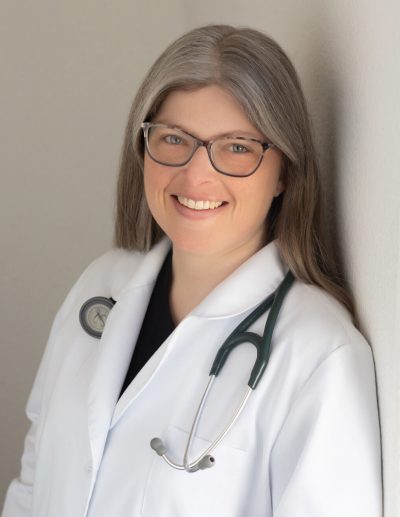
Dr. Robin Dickinson MD teaches pre-med for kids and teens at Dr. Robin's School

Not Ready? Need More Information?

We’ve designed the preview to let you see what your child’s experience will be, how Dr. Robin teaches, and what materials to expect.