
Making More Humans is a comprehensive, video-based human reproduction curriculum built by a physician who teaches clearly, thoroughly, and without shame or fear. Development, puberty, consent, relationships, and decision-making, all covered with the plain clinical truth.
Once your kid knows the actual clinical truth, they can spot the nonsense: misinformation, political talking points dressed up as facts, and people counting on their confusion to take advantage of them. That knowledge is what keeps them safe.
Most curricula stop at puberty and reproduction basics and STI warnings. Making More Humans covers the full arc: development, puberty, relationships, consent, and what to do when something goes wrong, so it's not a gap you have to patch together yourself.
Many of us grew up with sex ed that either scares kids straight or shames them into silence. Making More Humans teaches the clinical truth instead: plain biology, without a moral lens attached, so bodies stop being something to be embarrassed about or afraid of.
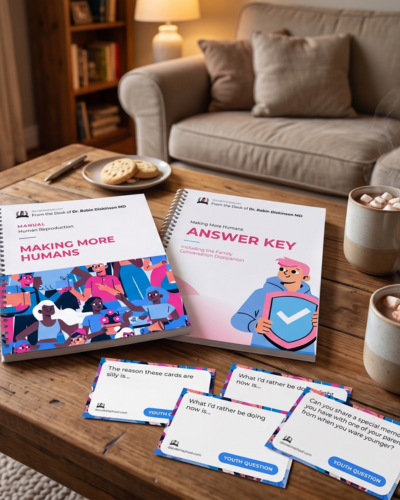
And the truth you’ll want to know.
By the time most parents think the timing is right, their child has already been getting a biology education, from social media, from Google, and from friends who don’t actually know what they’re talking about.
Waiting doesn’t protect them, it just means someone else fills the gap. The first module starts at age 7, and every learner starts at the beginning regardless of where they are now.
It’s also never too late. Many adults are finding that they are learning right alongside their kids because we never got the opportunity to learn this the first time.
To a younger kid, there isn’t any weird or “sexy” about any of this. It’s just science and no different than learning about their digestive system. We are the ones who made it weird.
Studies are very clear that youth who have received comprehensive sex education are more likely to delay intercourse and avoid risky behaviors than youth who did not receive that level of education.
Accurate information doesn’t create risk, it prevents it. Kids who know the clinical facts about their bodies, consent, and relationships are the ones who can recognize danger, name what happened to them, and get help.
You can be present for it and should definitely discuss it (which is why we’ve created so many resources to help with those conversations).
But most parents (even physicians in unrelated specialties) don’t have the in-depth clinical knowledge of these exact topics to teach this well, and don’t know how to start the conversation. Making More Humans handles the hard parts so you don’t need all the answers, you just have to create the space.
Most school sex ed covers the mechanics of reproduction and STI basics and stops there. Making More Humans covers the full arc: development, puberty, relationships, consent, and what to do when something goes wrong. Whatever your school does or doesn’t teach, this fills the gap.
Truth: MedPath was designed by a physician-educator to be clinical from day one while staying appropriately challenging and accessible at each level.
No. Reproductive biology, sexual development, and gender are scientific facts that have been studied and understood for generations. This curriculum teaches what’s actually known about how the human body works, not what someone believes about it.
Because we know parents have questions about how Dr. Robin handles sensitive topics, we’re created a page where you can look up the details. [Click Here to See How She Teaches]
Yes. Families can watch the video lessons together, or a student can work through them independently, at whatever pace fits.
Parents can listen ahead using the private podcast feed. Kids can watch on any device from a phone to a computer to an internet-connected television.
Dr. Robin taught her first lesson on human reproduction as a teenager, not a doctor. Her brother had just gotten “the talk” from his stepdad. It lasted about a minute before he left the room. So she picked up her biology textbook and finished it herself: genetics first, then how conception actually worked, then why people don’t get pregnant every time.
Her brother’s first response was disbelief. His second, once she walked him through the actual science, was complete understanding. No shame, no fear, just information delivered plainly.
She went on to medical school and spent over a decade in family practice, watching what happened to patients who never got that same plain explanation. Making More Humans exists because of what she couldn’t unsee: that the clinical truth, delivered without shame or scare tactics, is the only thing that actually protects people.
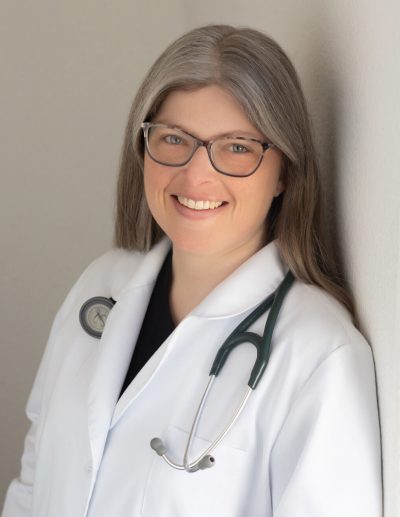
We’ve designed the preview to let you see what your child’s experience will be, how Dr. Robin teaches, and what materials to expect.